
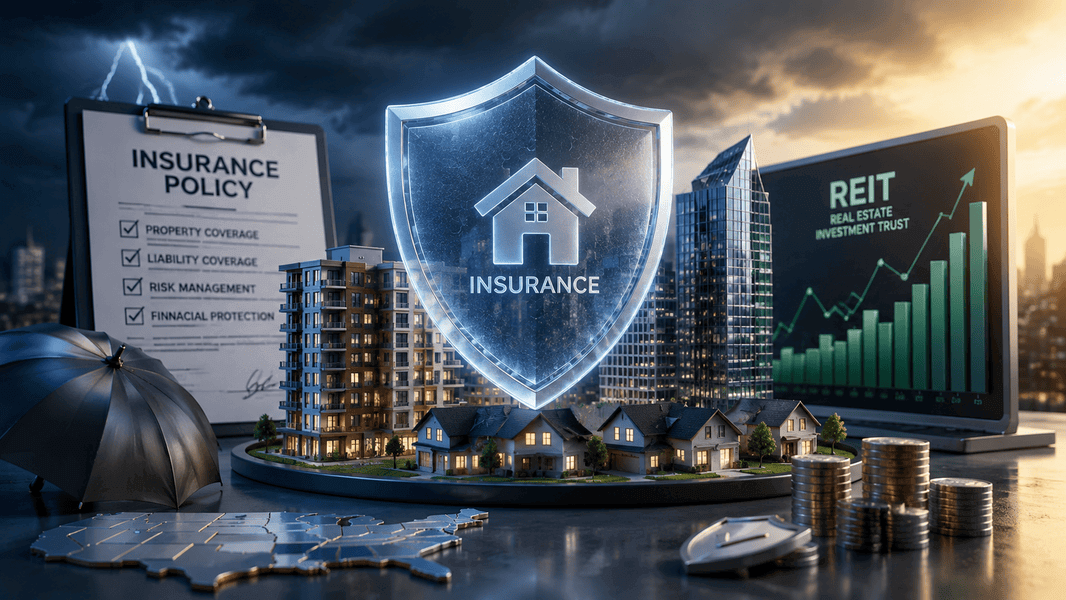
How Insurance and Risk Protection Work in U.S. Real Estate: Do They Protect REIT Investors?

Why Risk Protection Matters More Than Ever
In an investment landscape shaped by economic uncertainty, rising property values, and evolving market conditions, protecting capital has become just as important as growing it. Real estate remains one of the most trusted asset classes in the United States, yet investors must navigate risks ranging from natural disasters and legal disputes to market volatility and operational challenges. As a result, the U.S. real estate industry relies on a comprehensive system of insurance policies, lender safeguards, and legal protections designed to reduce risk.
However, many investors, particularly those investing through Real Estate Investment Trusts (REITs), often ask an important question: Do these protections also safeguard REIT investors from losses? Understanding the distinction between asset protection and investment protection is essential for evaluating risk, preserving capital, and making informed real estate investment decisions.
The Insurance Framework Behind U.S. Real Estate
Insurance plays a critical role in protecting real estate assets across the United States. Property insurance protects buildings against risks such as fire, storms, vandalism, and certain natural disasters. Title insurance protects owners and lenders from financial losses resulting from ownership disputes, liens, or defects in property records. Liability insurance helps protect property owners against legal claims arising from injuries or accidents occurring on their properties.
These protections create a foundation of security for property ownership and investment. Whether an investor owns a single-family rental property or a large commercial asset, insurance helps reduce the financial impact of unexpected events that could otherwise result in substantial losses.

Why Mortgage Lenders Require Insurance
Mortgage lenders have a direct financial interest in the properties they finance, making insurance a standard requirement for most real estate loans. Since the property serves as collateral, lenders require borrowers to maintain adequate insurance coverage throughout the loan term.
Several financial metrics influence this process:
- Loan-to-Value Ratio (LTV): Compares the loan amount to the property's value.
- Appraisal Value: Establishes the property's market value for lending purposes.
- Escrow Accounts: Often collect funds for property taxes and insurance premiums.
- Debt-to-Income Ratio (DTI): Helps lenders evaluate a borrower's repayment capacity.
By combining insurance requirements with underwriting standards, lenders help reduce the risks associated with property ownership and mortgage lending.
Texas Real Estate and the Importance of Insurance
Insurance plays an especially critical role in Texas, where rapid population growth, rising property values, and region-specific weather risks have increased the importance of comprehensive risk management for both property owners and investors. Houston faces hurricane and flood-related risks, while North Texas frequently experiences hailstorms, severe weather events, and wind damage. As property values continue to rise across Dallas-Fort Worth, Austin, Houston, and San Antonio, insurance coverage has become an increasingly important component of real estate ownership and investment planning.
Texas investors must also account for property taxes, insurance premiums, maintenance costs, and escrow obligations when evaluating investment opportunities. These expenses directly influence cash flow and long-term investment performance, making comprehensive risk management a critical part of successful real estate ownership.

How REITs Benefit from Real Estate Insurance
Real Estate Investment Trusts (REITs) own and manage portfolios of income-producing properties, including apartment communities, office buildings, industrial facilities, healthcare properties, and retail centers. Just like individual property owners, REITs typically maintain extensive insurance coverage on their assets.
Property insurance helps protect buildings from physical damage, liability insurance helps address certain legal exposures, and other specialized policies may cover business interruptions or operational risks. These protections help preserve asset values and support operational continuity, ultimately benefiting both the REIT and its shareholders.
By reducing the financial impact of unforeseen events, insurance helps preserve asset values, support operational continuity, protect rental income streams, and strengthen the long-term resilience of professionally managed real estate portfolios.

What Insurance Does Not Protect REIT Investors From
While insurance protects the underlying properties owned by REITs, it does not eliminate investment risk for shareholders. This distinction is one of the most important concepts for REIT investors to understand.
Insurance generally does not protect REIT investors from:
- Declines in REIT share prices
- Interest-rate fluctuations
- Economic recessions
- Lower occupancy rates
- Reduced rental income
- Falling property valuations
- Stock market volatility
For example, a fully insured apartment portfolio may still experience declining revenues if occupancy weakens or economic conditions deteriorate. Likewise, rising interest rates can affect borrowing costs and investor demand, influencing REIT performance even when insured properties remain physically protected.

Final Perspective
Insurance and risk-management systems play a vital role in protecting real estate assets throughout the United States, forming a critical foundation for long-term property ownership and investment stability. Property insurance, title insurance, liability coverage, and lender safeguards help reduce many of the operational risks associated with property ownership while supporting the long-term stability of real estate investments.
However, investors should recognize that these protections primarily safeguard the underlying assets rather than guarantee investment returns. While REITs benefit from comprehensive insurance programs that help protect their properties and operations, shareholders remain exposed to market conditions, interest-rate movements, economic cycles, and broader investment risks.
For investors evaluating opportunities in Texas and across the United States, understanding the difference between asset protection and investment protection is essential. The most successful investors understand that insurance serves as a critical layer of risk management, but sustainable investment success ultimately depends on thorough due diligence, portfolio diversification, disciplined capital allocation, and a long-term commitment to sound investment fundamentals.
Disclaimer
This article is intended for informational and educational purposes only and should not be considered financial, legal, tax, insurance, or investment advice. Insurance coverage, investment performance, and market conditions can vary significantly based on individual circumstances and property characteristics. Investors should consult qualified professionals before making financial or investment decisions.
References
- Texas Real Estate Research Center at Texas A&M University
- National Association of Realtors (NAR)
- Freddie Mac – Primary Mortgage Market Survey (PMMS)
- Federal Reserve Economic Data (FRED)
- Federal Reserve Board
- Mortgage Bankers Association (MBA)
- National Association of Insurance Commissioners (NAIC)
- U.S. Securities and Exchange Commission (SEC)
- National Association of Real Estate Investment Trusts (Nareit)
- Texas Department of Insurance (TDI)
News insight
 Jul 12, 2026
Which Type of Real Estate Is Best for a Salaried Person in the USA: Commercial or Residential? A Financial Breakdown of Returns and Risks
For many salaried professionals, building wealth requires more than simply earning a higher salary....
 Jul 12, 2026
Best Age for Real Estate Investment
One of the most common questions among aspiring investors is: What is the best age to invest in real...
 Jul 12, 2026
How $1,000 Can Grow in the Texas Economy: Small Capital, Big Opportunity
Many investors assume meaningful wealth creation begins with substantial capital. However, the Texas...